Why Crosswalks Need Automated Enforcement
A driver who rolls through a crosswalk while someone is stepping off the curb is gone before any officer can write a note. Police cannot watch every crossing around the clock, and the crossings near schools, bus stops and busy junctions are exactly the ones where a missed yield matters most.
AI cameras close that gap. They watch the crossing continuously, recognize when a vehicle fails to stop for a pedestrian, and capture the evidence for a human reviewer to confirm. Mview Analytics by Mgroup builds these video analytics and enforcement platforms for municipalities and public authorities, and this page explains how the approach works on the street.
How the Cameras Detect a Failure to Yield
The system does not simply look for a car near a crosswalk. An AI platform for object and event detection first identifies the objects in the scene: pedestrians, vehicles, and the marked crossing area. It then follows each one frame by frame. (All of this is, of course, subject to the blurring of faces, full protection of the privacy of road users, and compliance with local regulatory requirements.)
A violation is an event, not a single image. The logic checks a sequence of conditions:
-
A pedestrian is on the crossing or has clearly begun to enter it.
-
A vehicle is approaching in the lane that pedestrian must cross.
-
The vehicle continues through the crossing zone without stopping or slowing enough to give way.
Because the sequence has to hold together over time, a car that stops properly, a pedestrian waiting on the pavement who never steps out, and a vehicle passing when the crossing is empty are all ignored. This is what keeps the false-alert rate manageable and the review queue useful.
Camera Placement and Evidence Capture
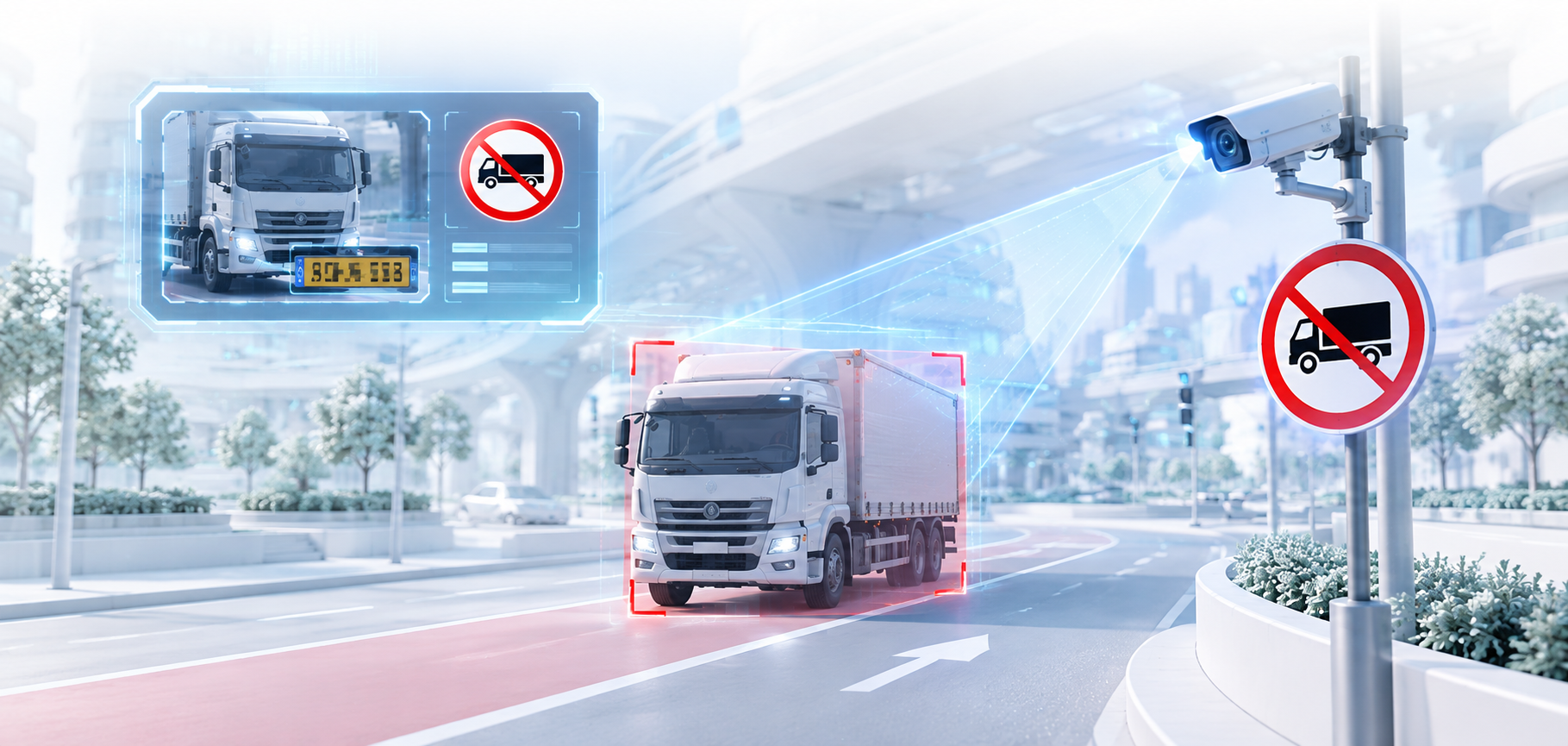
Placement decides whether the detection logic has a clear view. The camera needs to see the full crossing, the approach lane, and the vehicle’s number plate at the moment it passes through the crossing zone. Mounting height and angle are chosen so that parked vehicles, buses and street furniture do not block the pedestrian from view.
When an event is detected, the platform records the evidence needed to support a decision:
- A short video clip covering the approach, the pedestrian entering the crossing, and the vehicle passing.
- Still images with the number plate readable.
- Time, date and location data tied to the specific crossing.
Evidence is stored in a secure, encrypted evidence management environment, and a trained reviewer confirms each event before any notice is issued. Protecting that chain from tampering matters as much as the detection itself, a topic covered in our guide to cybersecurity in smart traffic enforcement.
Legal Considerations Before You Switch On
Rules on automated enforcement differ between countries and sometimes between regions, so the legal groundwork should come before the hardware. Confirm whether failure to yield to pedestrians can be enforced by camera under local law, who is permitted to issue the notice, and what evidence a court or appeals body will accept.
Plan for these points early:
- Human review of every flagged event before a notice goes out.
- Clear signage and public communication about where enforcement operates.
- Data protection rules covering how footage and plate data are stored, who can access them, and how long they are kept.
- Alignment with the police or authority that will handle the resulting cases.
Our guide on choosing the right enforcement system covers how to confirm regulatory compliance before you commit to a platform.
Piloting at High-Risk Crossings and the Safety Benefit
The practical way to start is a small pilot rather than a citywide rollout. Pick a few crossings with a known problem, such as those near schools, transit stops or stretches with a record of near-misses or collisions. Record a baseline of how often drivers fail to yield before the cameras go live, so you can measure change afterward.
From there, align the legal and police stakeholders, install and integrate the system, run the pilot for a defined period, and decide whether and how to scale. We walk through each stage in how to plan a smart traffic enforcement pilot project in 6 steps, including a checklist and the common pitfalls to avoid.
The benefit falls on the people most exposed at the crossing: children, older residents, people with limited mobility, and anyone on foot. Consistent enforcement changes driver behavior where it counts, because the chance of being noticed no longer depends on whether an officer happens to be standing there. The same AI detection approach also supports other enforcement goals, such as bus lane enforcement.
If your municipality is weighing a crosswalk pilot, you can see our enforcement solutions or request a live demo from the team.